
June 14, 2026 Proper 6 Sermon | The Rev. Brian Gregory
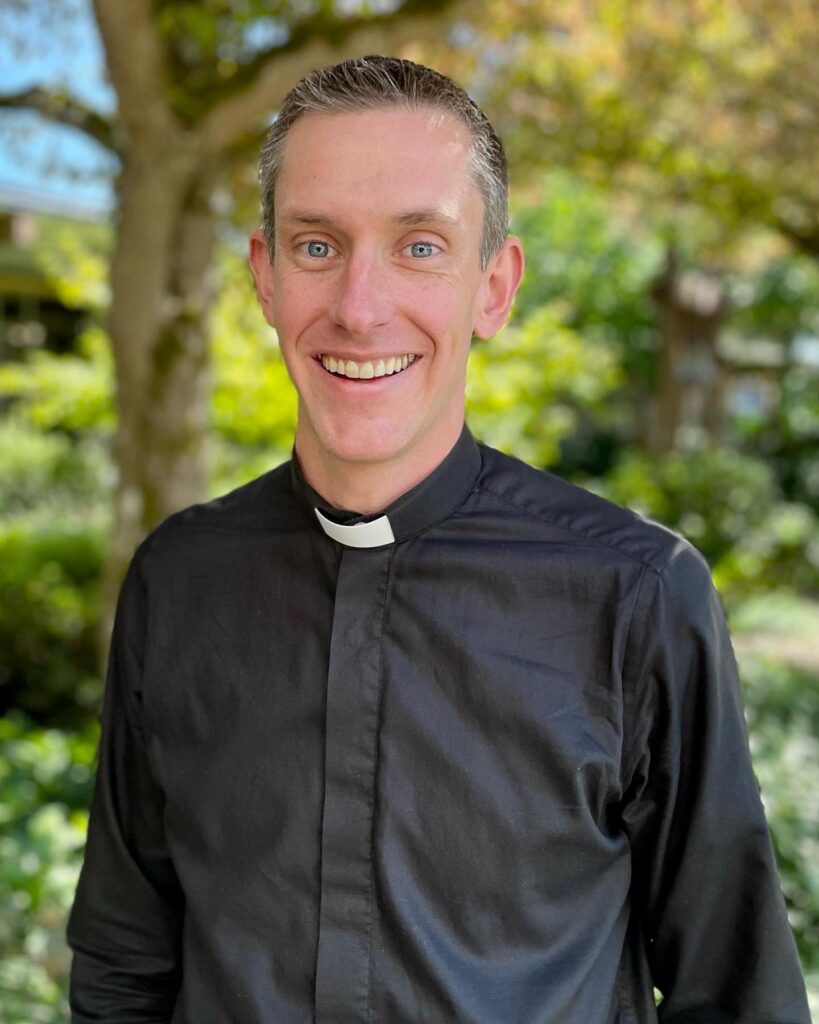
Have you ever laughed at an inopportune time? I sure have. One time that sticks out to me is when my family and I left Guatemala after living there for seven months. We weren’t planning to leave when we did – we had planned on staying for a year. But in the middle of that year, Covid happened. I have a distinct memory of sitting on a bench in Central Park in Antigua, the town in which we lived, on a Friday night in March of 2020, talking to my parents who live in the Seattle area. They were in the middle of the early days of Covid. Guatemala at that moment felt totally normal and safe. They were encouraging my family to come home because they had seen and experienced how fast everything had happened. I remember telling them, “why would we come home to the epicenter of the pandemic. Covid isn’t in Guatemala. It feels a lot safer here and everything is normal.” I hate to say it, but my parents were right.
The next day, on Saturday morning, the president of Guatemala announced the first case. He assured the country that the person had been isolated in a hospital in Guatemala City and that no other cases were known or suspected. It still felt like we were staying put. My first inclination was when my boss called me. He encouraged me to start thinking about how we would get home if we chose to leave, but I told him we planned to stay. Throughout the day we started to hear rumors, though. One was of a plane departing the United States for Guatemala. Before closing the plane door, the captain of the flight told everyone onboard that, if they chose to stay on the plane, there may not be a way for them to return to the US. My family went out to dinner that Saturday night with our neighbors – also a young family from the States. As we sat down to dinner, we asked one another if we were planning on leaving. We all felt very comfortable and certain about staying. And then we heard more verified rumors that the airport was closing and the borders would be closed on Monday. By the end of dinner, we all had plane tickets.
We spent Sunday packing up our house, giving away the groceries we had bought on Saturday just in case, and saying goodbye to not all of our friends, but a few. When we arrived at the airport Monday morning for our flight – which was the second to last to depart before the borders were closed – I had a vast amount of emotions. We were tired, stressed, sad, and fearful that we were coming “home” with no home to go to. After we had checked into our flight and gone through security, we went through immigration. My passport had been stamped and I stepped over the “you are now leaving Guatemala” line on the floor. Just then, I looked at the flight status board. Next to our flight – the last option to get back to the US – it said “cancelled.” The only response my body could muster at that moment was to laugh. My wife was not amused. It turned out that our flight was not, in fact, cancelled, but that just made me laugh more. Laughter shows up more than just when something is funny. We might laugh in disbelief, when we encounter something absurd, or when we are overjoyed.
We have a story of inopportune laughter in our reading from the Old Testament this morning. Sarah laughed at God and God’s promises. We heard the beginning of this story last Sunday when we read Genesis 12 and God’s promise to Abraham and Sarah that, out of them, God would make a great nation. That, through their family, God would bless all the families of the earth. They heard that promise and the left home to journey to the land of Canaan God promised to give them. But for the laughter to make sense, to sit with this story, we need to know what happened between Genesis chapters 12 and 18.
God’s initial promise to Abraham and Sarah in Genesis 12. Abraham was 75 years old at that point, Sarah 65. The fulfilment of the promise likely could not have come soon enough in their minds. In Genesis 15, after what we can guess was between 5-10 years given textual clues, Abraham questioned God’s promise, saying, “you have given me no offspring.” God took the initial promise a step further and established a covenant with Abraham. In this covenant – a formal, binding, agreement that establishes a deep and enduring relationship – God said, “to your descendants, I give the land of the Canaanites. In Genesis 16, 11 years after God’s initial promise to give Abraham and Sarah a child, Abraham and Sarah became impatient. They took matters into their own hands and Abraham fathered a child with an Egyptian slave. God was not pleased with the lack of trust in God’s promise but nevertheless remained in the covenantal relationship that had been established. But still nothing happened. In Genesis 17, thirteen years later, when Abraham was 99 years old, God once again promised to Abraham, saying,
“this is my covenant with you: You will be the father of many nations…I will make you very fruitful; I will make nations of you, and kings will come from you. I will establish my covenant as an everlasting covenant between me and you and your descendants after you for the generations to come, to be your God and the God of your descendants after you. The whole land of Canaan, where you now reside as a foreigner, I will give as an everlasting possession to you and your descendants after you; and I will be their God.”
God continued, “As for Sarai your wife, you are no longer to call her Sarai; her name will be Sarah. I will bless her and will surely give you a son by her. I will bless her so that she will be the mother of nations; kings of peoples will come from her.”
It was at this point that Abraham laughed, saying, “Will a son be born to a man a hundred years old? Will Sarah bear a child at the age of ninety?” That brings us to our reading today when the promise of a child is made once again. The divine and mysterious visitors made the promise yet again to a barren Sarah: “you will have a son.” The promise was old, hearing it again tiring, and the thought of it being fulfilled was absurd. Just as Abraham had laughed at the thought of a child coming into their family, all Sarah could do was laugh.
Our reading from the lectionary skips from Genesis 18, 24 years after the first promise, to the following year in Genesis 21. Abraham was 100 years old, Sarah 99. The promised child of the covenant was finally born when it was all but impossible. After 25 years of waiting; after promise after promise; after setbacks and questioning whether it would happen; Sarah laughed again…but this time laughter that was overjoyed at hopes and promises fulfilled. We know something about waiting here at St. Luke’s. We have a vision for our property and for our future that more than a few people probably laughed at when we began exploring 9 years ago. How could a church like St. Luke’s build 290 units of housing? Could a church our size even raise the funds to finish out the new church space? The initial laughter at the pipe dream has turned into laughter about the ways the Holy Spirit has shown up, again and again and again, to clear the path and make a way for the vision of affordable family housing in Ballard and a new church space to become reality. And while St. Luke’s Affordable Apartments opened in October, the market has changed for the second building and new church space. We experienced delay after delay, extensions with our developer, reaching the point where we seriously wondered whether the vision would be realized. Perhaps building 84 units of affordable housing was enough and all God called us to. But then a new developer stepped in, wanting to take over the project and more laughter at the ways God continues to provide and make a way forward. And now, likely months away from the beginning of construction if the new developer indeed takes over…and we no longer have a place lined up to go when we move offsite.
Sometimes, all you can do is laugh when it feels impossible, when yet another roadblock appears, when the stress rises and the unanswered questions mount. But just like Abraham and Sarah experienced, along with countless others throughout Scripture and the history of the church who were led by God on journeys that took a lot longer and included more winding turns than they hoped, God’s promises are always fulfilled. God is good…all the time. God is with us…even when we question and have doubts. God has a plan…even when we don’t see how it will come together.
What God doesn’t promise is an easy path or immediate results. As much as we might hope otherwise, that is the clear in the grand story of Scripture and the story of salvation: moment after moment, story after story, just as it seems like the world will finally be made whole, it seems like God’s plan won’t be fulfilled. The story of salvation, of the world being made whole, begins in the calling of Abraham and Sarah – that all the nations of the world would be blessed through them. When that failed to bring wholeness, God came among us in Jesus. The birth of the Messiah brought hope that evil and all that robs creation of life would be defeated. But Jesus’ journey led to the cross and the apparent defeat of God’s reign. In the resurrection we discover that death doesn’t have the final word, that God’s kingdom is bigger and stronger than anything that might stand opposed to it. At Pentecost, the church was sent out in the power of the Holy Spirit to play a part in God’s kingdom coming more and more. But 2000 years later, wholeness often still seems as far off as ever.
When we speak of God’s kingdom, when we long for wholeness, when we have a vision of a church that cares for and provides space for its community for the next 100 years and we run into obstacles along the way, it is easy to laugh and say with Abraham and Sarah, “do you know how long we’ve been waiting and working for this? The wait is getting long and the promise getting old.” It is easy to question whether God truly is making a way for promise and vision, to question whether God is truly with us.
So how do we hold on to hope when it feels like our own lives, our own community, our own world has made it as far as we ever will or like we’ve been left behind and forgotten? We do well to remember that we aren’t the first to feel like that, that adversity and suffering is not new. And we would do well to listen to the Apostle Paul who reminds us that suffering produces endurance, and endurance produces character, and character produces hope…and hope doesn’t not disappoint because God’s love has been poured into our hearts through the Holy Spirit that has been given to us.
We don’t get to control the outcomes. We don’t get to decide the timeline. Sometimes all we can do is laugh along the way at how absurd our hopes and faith sound when it seems like everything is stacked against hope being realized. But God’s will will be done. God’s promises are always fulfilled. I believe in the depth of my heart and my soul that, at the end, we will laugh at the overwhelming goodness of God.